Skip to content
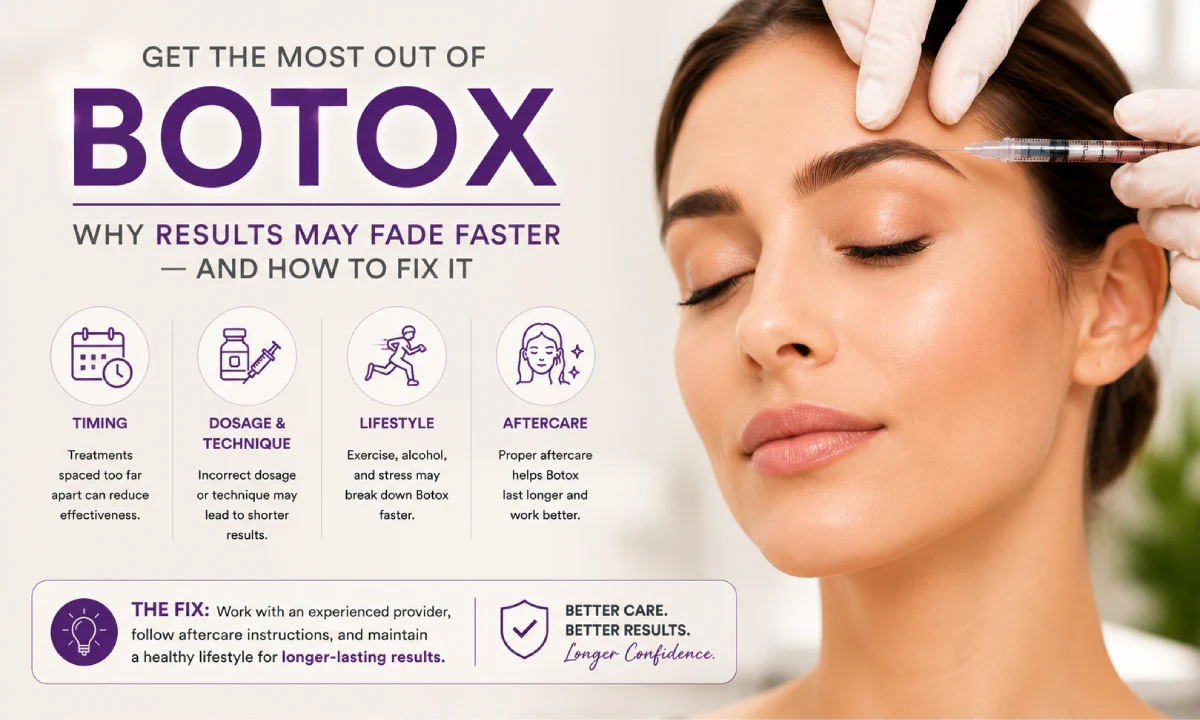
Table of Contents
If your Botox Injections seem to fade faster than expected, the issue is often not the treatment itself but the way your plan fits your facial movement, dose, and timing. Fine lines, forehead creases, frown lines, and crow’s feet can return early when Botox is too light, placed inconsistently, or not matched to stronger muscles. With the right injector and a more personalized approach, your next treatment can feel more balanced, natural-looking, and consistent.
Why did my Botox wear off so quickly?
Botox may wear off sooner than expected if the dose was too light, the treated muscles are very active, or your body metabolizes the product more quickly.
What Botox Is Designed to Do
Botox is a neuromodulator that temporarily relaxes targeted facial muscles responsible for repeated expression. It is often used for forehead lines, the “11” lines between the brows, crow’s feet, and other areas where movement creates visible creasing.
This is why Botox for wrinkles works best on dynamic lines. These are wrinkles that appear or deepen when you raise your brows, frown, smile, or squint. If a line is visible even when your face is relaxed, Botox may soften the movement behind it, but it may not erase the crease completely.
So, How Long Does Botox Last?
Most patients can expect Botox results to last around three to four months, although individual timelines vary. Some people notice movement returning around eight to ten weeks, while others maintain a softer appearance closer to four months.
Botox also fades gradually. You may first notice that your brows lift more easily, your frown feels stronger, or fine lines show during expression before full movement returns. A shorter timeline does not always mean something went wrong. It may mean your dose, target areas, or maintenance schedule needs to be refined.
To understand why results may fade sooner than expected, it helps to look at the most common factors that influence how Botox settles, works, and gradually wears off.
1. Your Dose May Be Too Light for Your Muscle Strength
One common reason Botox Treatment does not last as long as expected is underdosing. Many patients want a natural result, and a conservative approach can be appropriate, especially for first-time treatment. The issue is that too little product may not relax a strong muscle enough to hold the result for very long.
Strong frown muscles, active forehead muscles, and expressive crow’s feet may need a more strategic dose. This does not mean the answer is always more product. A skilled injector should evaluate your movement, review how your last treatment performed, and decide if a small adjustment would make the result more reliable while still allowing natural expression.
2. Your Facial Habits and Lifestyle May Play a Role
Some people use their facial muscles more than they realize. Frequent squinting, brow lifting, frowning during concentration, or smiling with strong eye movement can make treated areas feel active again sooner as Botox wears off. Long hours on screens or in bright outdoor settings may also lead to repeated squinting.
Metabolism can matter as well. Very active patients may process neuromodulators faster, although this varies widely. Sunglasses, sunscreen, better screen habits, and consistent skincare may reduce repeated strain and help the skin look healthier as movement softens.
3. The Concern May Need More Than Botox
Anti-aging Botox can be helpful for expression-related lines, but it does not correct every age-related concern. Volume loss, skin laxity, rough texture, pigmentation, and deeper folds may require a different treatment plan. This is one reason patients may feel disappointed when they expected Botox to do the work of filler, resurfacing, or skin-tightening treatments.
For example, Botox may soften forehead creasing caused by brow movement, but it will not replace temple volume. It may reduce frown muscle activity, but a deep crease between the brows may still need time or additional support. A consultation helps separate muscle-related wrinkles from concerns caused by skin quality or facial structure.
4. Injector Technique Can Affect Longevity
Botox results depend on more than the product itself. Placement, depth, dose, spacing, and facial assessment all matter. Two patients can receive the same number of units and have different outcomes because their anatomy and movement patterns are different.
A thoughtful injector studies the face at rest and in motion. They look at brow position, eye shape, muscle pull, asymmetry, and how one area affects another. This is especially important for facial rejuvenation with Botox, where the goal is a refreshed appearance that still looks natural. If your previous results faded quickly, share when movement returned and whether one area wore off faster than another.
How to Fix Botox Results That Fade Too Soon
Botox cannot be made permanent, but you can take a few practical steps to help your next treatment plan work better for you.
- Track Your Results
Pay attention to when your Botox starts working, when movement returns, and which area fades first. These details help your provider understand your response more clearly.
- Take Progress Photos
Photos can make follow-up conversations easier. Take pictures before treatment, once results settle, and when you notice lines or movement returning.
- Be Specific at Your Follow-Up
Instead of saying the results “did not last,” explain what happened. Mention if the result felt too light, faded unevenly, or looked good but wore off too soon.
- Follow Aftercare Instructions
Aftercare is simple, but it still matters. Avoid rubbing the treated area, follow activity guidelines, and give the product time to settle as instructed by your provider. Good aftercare helps support the treatment process.
- Discuss Complementary Treatments
Botox works best for wrinkles caused by muscle movement. If deeper creases, volume loss, or skin texture are part of the concern, treatments like dermal fillers or microneedling may complement Botox outcomes.
Altera Aesthetix: Botox in Savannah, GA, Botox in Statesboro, GA, and Richmond Hill, GA
At Altera Aesthetix, Botox is approached with the understanding that patients want to look refreshed, not overdone. Many people seek treatment because unwanted lines and wrinkles make them look more tired or older than they feel. Others have tried creams and skincare products, only to realize that expression lines caused by muscle movement need a different type of care.
For patients considering Botox in Savannah, GA, Botox in Statesboro, GA, or treatment near Richmond Hill, GA, our team offers neuromodulator treatments focused on smoothing wrinkles while maintaining authentic facial expression. The plan is based on your concerns, your movement, and your comfort level, not a fixed template.
Smooth Wrinkles with Botox Consultation Today!
Frequently Asked Questions
How long does Botox usually last?
Botox usually lasts about three to four months, but the timeline can vary based on dose, muscle activity, metabolism, and treatment consistency.
Can I make my Botox results last longer?
You cannot make Botox permanent, but consistent treatments, proper dosing, good aftercare, and a customized injection plan may help results last more predictably.
What should I do if my Botox results do not last?
Schedule a follow-up with your provider so they can review your results, assess your facial movement, and adjust your next treatment plan if needed.